The Premier League returns this weekend, with Liverpool preparing to face a difficult challenge against Brighton at Anfield on Sunday. With both teams looking to secure a positive result, major refereeing decisions could play an important role in the outcome.
Andoni Iraola’s Liverpool side will need to be at their best against a Brighton team that has made an impressive start to the season. The Seagulls have won five of their seven league matches and scored 23 goals, making them the highest-scoring team in the Premier League so far.
Liverpool, meanwhile, have managed just nine goals in seven games. The difference highlights the work Iraola still has to do as he looks to find the right balance between attacking quality and defensive stability while his players continue adapting to his approach.
Sunday’s encounter will demand a strong performance from the Reds, although a favourable refereeing decision or two could also prove important. Liverpool have had reasons to question certain officiating decisions this season, including Ryan Gravenberch’s red card against Manchester City, which remains a contentious moment.
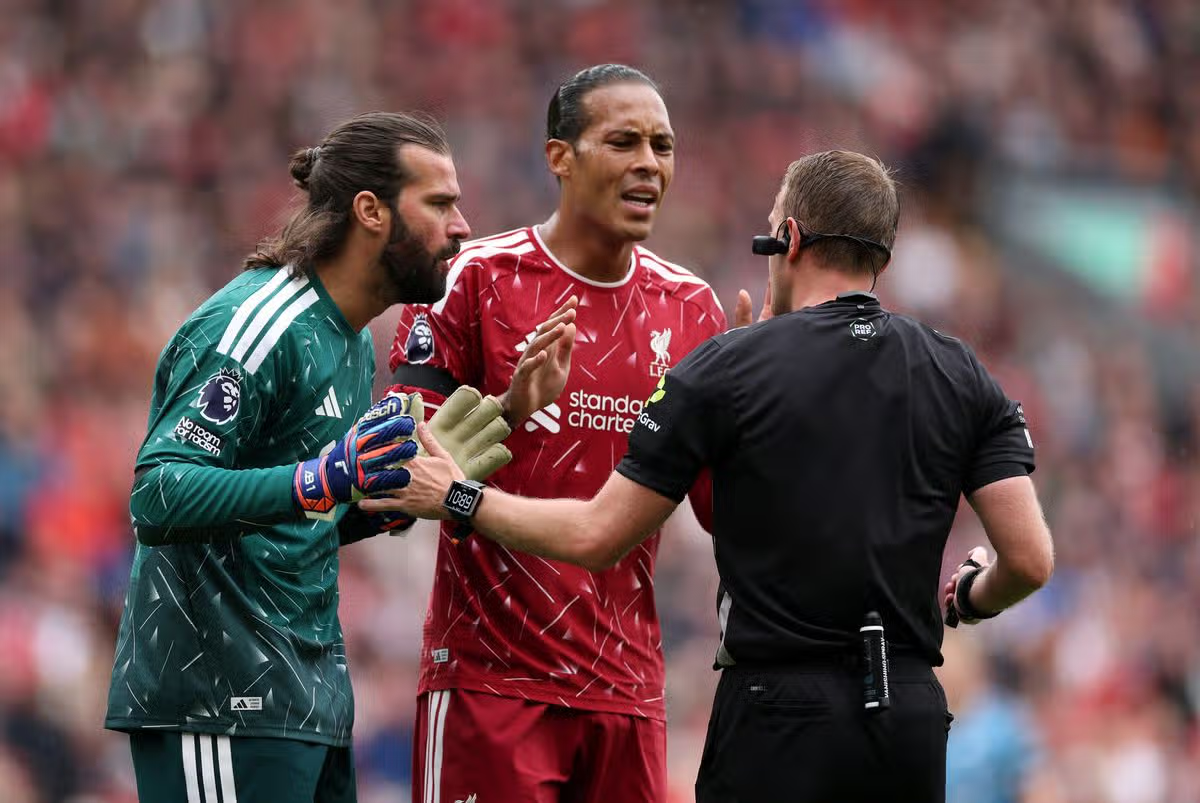
Sam Barrott has been appointed to officiate Sunday’s match at Anfield. It will be his second time refereeing Liverpool in the Premier League this season, following a controversial incident during their earlier meeting with Nottingham Forest.
During that game, Forest took a quick throw-in that allowed former defender Neco Williams to race towards goal. Williams attempted a shot that went wide, but a collision with Liverpool goalkeeper Alisson became the focus of attention.
Alisson had rushed out to narrow the angle and made contact with Williams as the incident unfolded. Although the attacking opportunity had already passed, Barrott judged that the Liverpool goalkeeper had brought down the Forest player and awarded a penalty.
Morgan Gibbs-White converted the spot-kick to put Forest on the scoresheet. Liverpool later responded through Victor Munoz, with the match eventually ending in a 2-2 draw.
However, the penalty decision subsequently attracted criticism from the Key Match Incident Panel, which reviews selected refereeing and VAR decisions.
The panel voted three to two that the penalty should not have been awarded. Nevertheless, all five members agreed that VAR was correct not to intervene, as the original decision did not meet the required threshold for a clear and obvious error.
Explaining its position, the panel stated that contact from Alisson was inevitable because of his momentum while attempting to make the save. It also concluded that the contact was not reckless and fell below the threshold required for a penalty.
Despite questioning the decision, Liverpool may also acknowledge that their overall performance was not enough to guarantee victory against Forest.
As the Reds prepare for another demanding Premier League fixture, Iraola will be hoping for better fortune in the coming weeks, particularly regarding injuries and important refereeing decisions.
With Brighton arriving at Anfield in impressive scoring form, Liverpool will need to deliver a much-improved performance if they are to secure all three points.